Carving Modern Caves
Troglodyte living is not a relic of the past; it is the ultimate expression of geological integration. By carving a home directly into solid bedrock—such as sandstone or tuff—you bypass the need for imported structural materials entirely. The earth itself is the floor, the walls, and the roof.
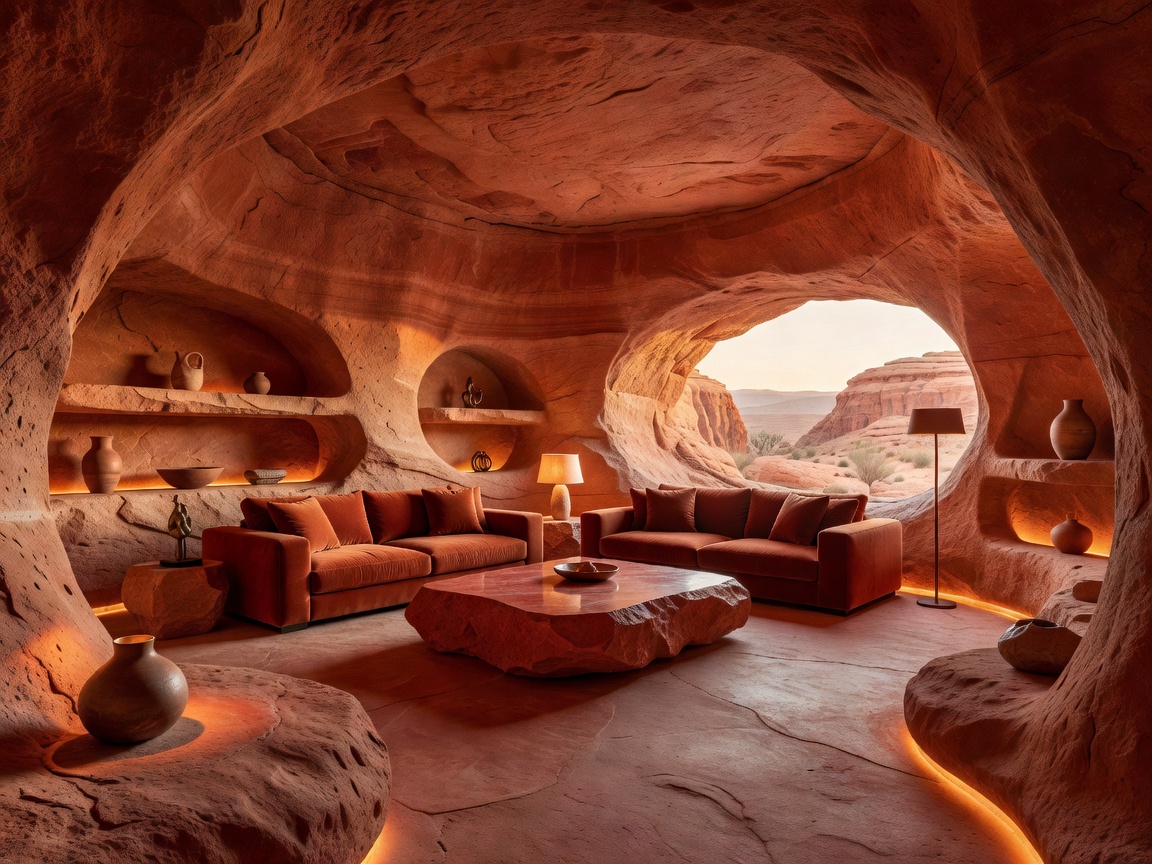 Bedrock Stability
Geological Engineering
Unlike soil, which shifts and exerts massive hydrostatic pressure on retaining walls, solid rock is structurally self-supporting if carved with the correct vaulted arches. These spaces can persist for millennia.
Controlling the Cavern Climate
The primary challenges of rock-cut architecture are ventilation and radon gas accumulation. Because the rock is a closed system with massive thermal inertia, moisture introduced by human breath and cooking can condense on the cool stone walls.
Modern caves solve this via Heat Recovery Ventilators (HRVs) and strategically bored air shafts that create natural draft currents. By maintaining a steady airflow, the cave remains bone-dry while holding its inherent ~55°F temperature. To bring the living space to a comfortable 68°F requires only a fraction of the energy used in surface homes—often achieved simply by the body heat of the occupants and standard appliances.
| Challenge |
Modern Solution |
| Moisture Condensation |
Continuous HRV Air Exchange |
| Radon Gas Mitigation |
Sub-slab depressurization & active venting |
| Natural Light Lack |
Solar light tubes & fiber-optic sun relays |
Carving a modern cave is an exercise in extreme patience and heavy machinery, but the payoff is an ancestral, profound sense of shelter that surface structures cannot replicate.